

 63068 Montalto delle Marche AP
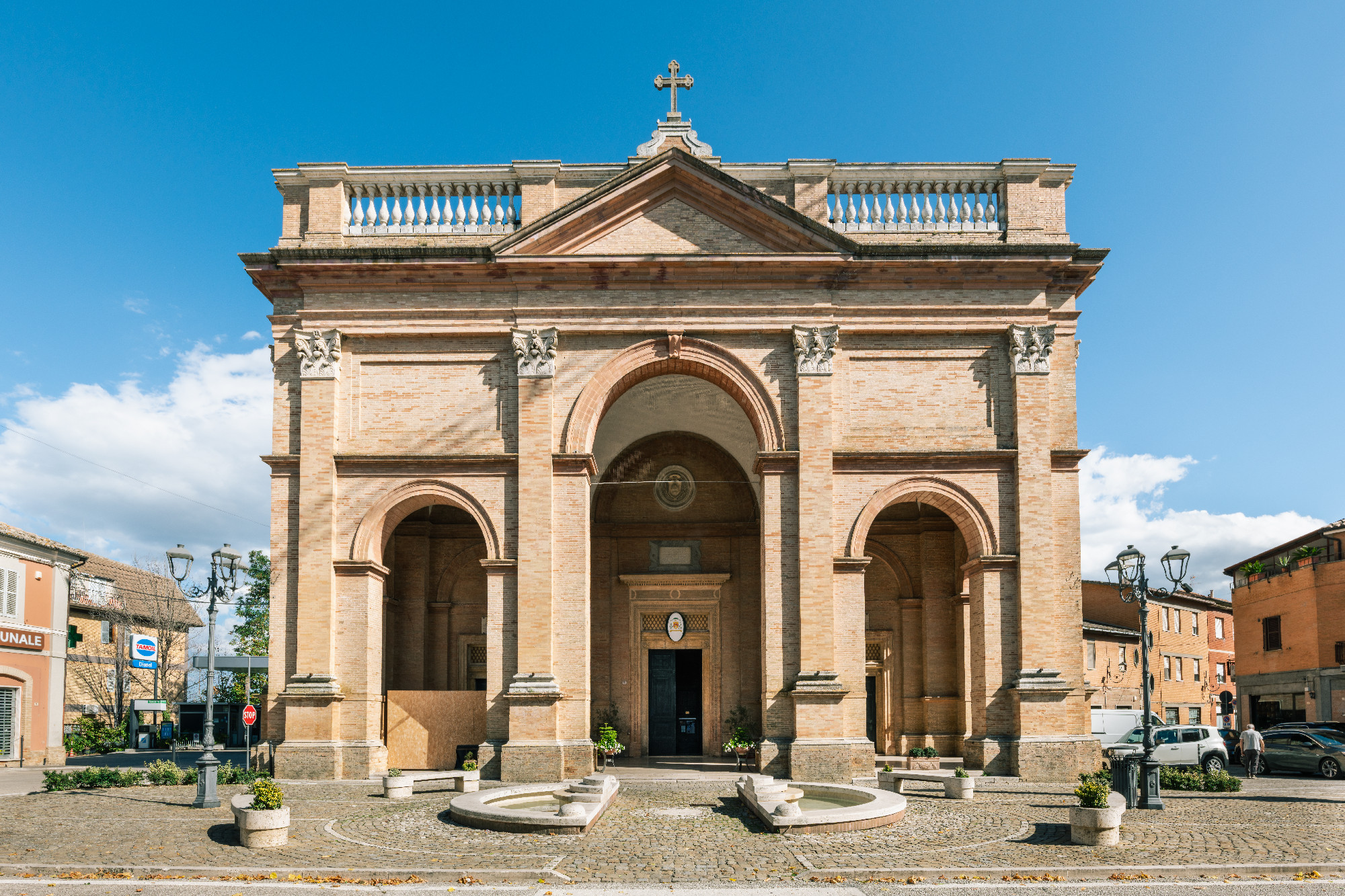
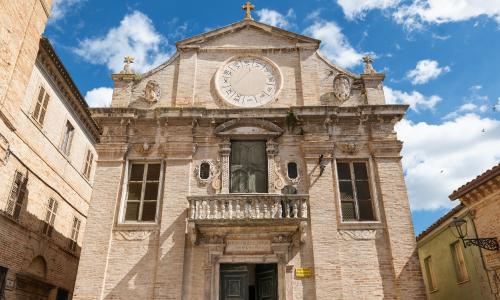
Great monuments often become the symbol of the cities that host them, and this is true of the monumental Cathedral, a tangible sign of the love and grand vision that Felice Peretti—Pope Sixtus V—had for his homeland. Felice Peretti, who became Pope in April 1585 under the name Sixtus V, elevated the city of Montalto to the rank of Diocese in November 1586 and declared the Collegiate Church of Santa Maria intus Civitatem a Cathedral. To build the new Cathedral, based on designs by the architect Girolamo Rainaldi, Sixtus V even had an entire hill leveled and used the solid stone quarried from the mountain itself to fill the foundations. On May 29, 1589, a cross was planted on the site where the High Altar would rise. As ideally planned, the Cathedral was to stand at the point of junction between the ancient village and “New Montalto.” The laying of the first stone took place on May 30, 1589, the feast of Saint Felix and Sixtus V’s name day, and by the time of the Pope’s death on the evening of August 27, 1590, construction had already reached the level of the square, with the vaults completed. Thereafter, work proceeded slowly, and the contribution of Girolamo Codebò of Modena, the fifth Bishop of Montalto, proved decisive. Significant support for the continuation of the works also came from other prelates of the Diocese, until Eleonoro Aronne, Bishop from 1847 to 1887, entrusted the design of the dome, tower, and portico to the architect Luigi Poletti of Modena, renowned for overseeing the reconstruction of the Basilica of St. Paul Outside the Walls in Rome.
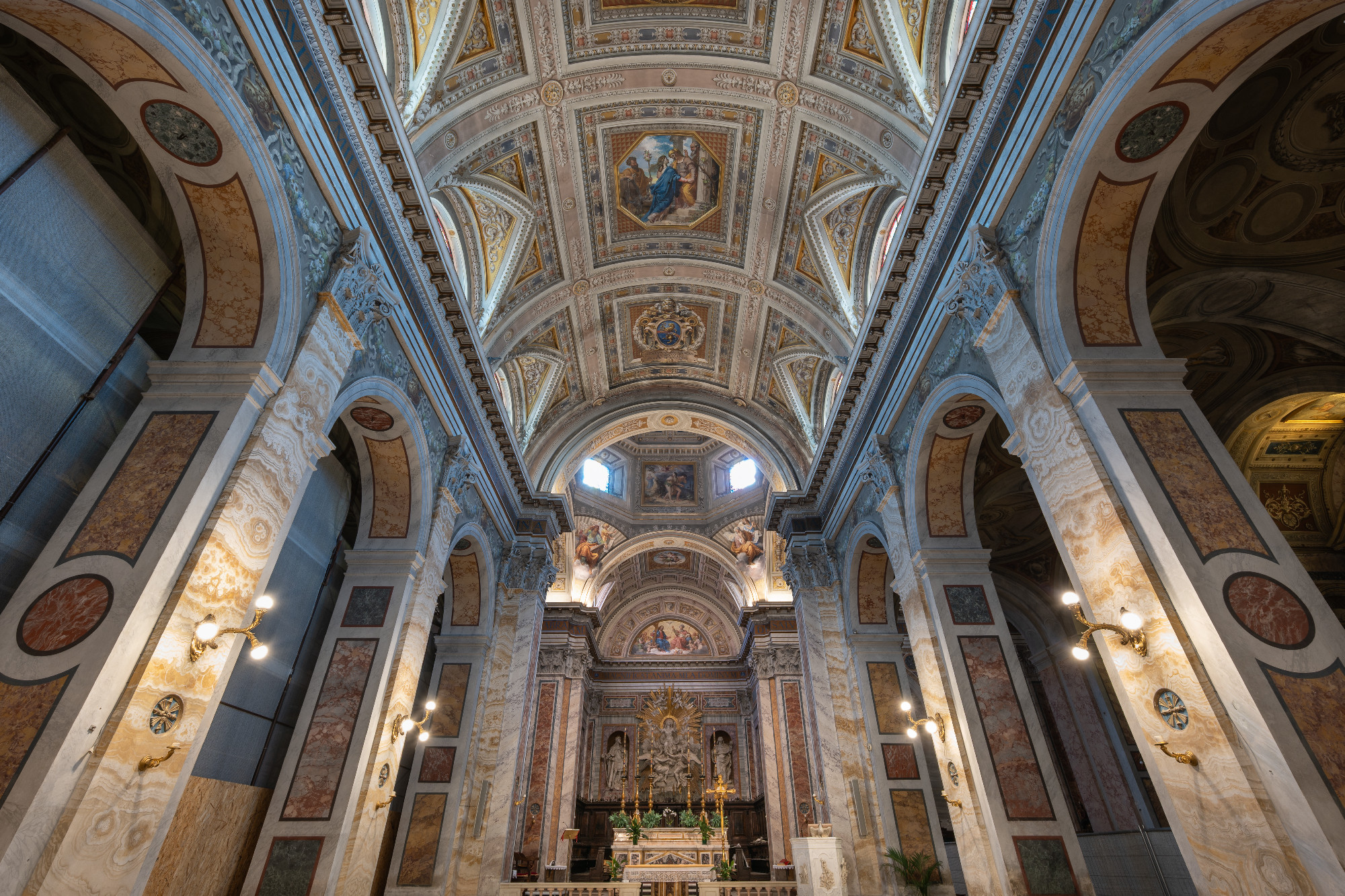
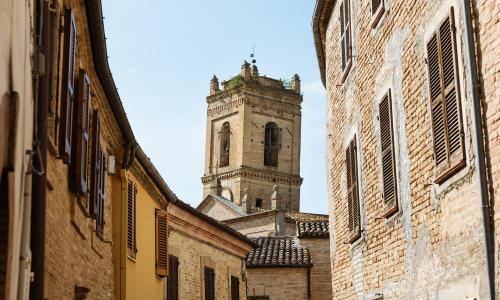
Covering an area of nearly 1,800 square meters, the Cathedral opens onto the four streets that converge there today. Since the church had to be built on a steeply sloping site, the lower church was designed with a Greek-cross plan to support the upper church with a Latin-cross plan. The tower houses a peal of six bells. The oldest, dating to 1263, comes from the Convent of San Francesco delle Fratte (tradition holds that Saint Francis of Assisi himself, while on pilgrimage in the Piceno area between 1209 and 1215, founded the convent in which Sixtus V later trained; the building is now privately owned). The largest bell, the so-called campanone, weighing about one metric ton, comes from the ancient cathedral of Santa Maria ad collem. The interior decoration is the work of Luigi Fontana of Monte San Pietrangeli—painter, sculptor, architect, member of the Academy of Saint Luke, and keen observer of the great masters of the Italian Cinquecento. A large portion of the expenses was covered by Cardinal Carlo Sacconi. Former Apostolic Nuncio to Paris from 1853, he enriched the Cathedral with several fine gilded silver sacred vessels, gifts from Napoleon III. Dedicated to the Assumption, the entire pictorial program celebrates the Virgin Mary, and the full text of the Canticle of the Magnificat runs along the base of the vaults. In the drum of the dome are four biblical scenes from the Old Testament, while the pendentives depict the four Major Prophets: Isaiah, Jeremiah, Ezekiel, and Daniel. On the vault of the central nave, among the coats of arms of Cardinal Carlo Sacconi, Bishop Aronne, and the lion of the Sistine emblem in memory of the Founder, are scenes of the Annunciation, the Immaculate Conception, and the Visitation to Saint Elizabeth. In the lunettes flanking the High Altar, on the left is Saint Luke the Evangelist with the ox—the sacrificial animal alluding to Christ’s Passion—and, according to tradition, the image he painted of the Virgin Mary with the Child; on the right is Saint John, who emerged unharmed from a cauldron of boiling oil during the persecution under Domitian, accompanied by the eagle that flies higher than all other birds, just as the Evangelist stands out theologically and mystically, symbolizing the Ascension of the Lord. Between the two pillars in front of the present Chapel of the Holy Family once stood the magistrates’ stalls, reserved for members of the Civic Magistracy when they attended the sacred liturgy in official and solemn form. The Magistracy enjoyed specific honors and distinctions regulated by a special ceremonial. In the left arm of the transept is the Chapel of Saint Vitus the Martyr, Protector of Montalto since August 26, 1646; in the right arm is the Chapel of the Most Holy Sacrament, featuring a fine painting depicting the Last Supper.
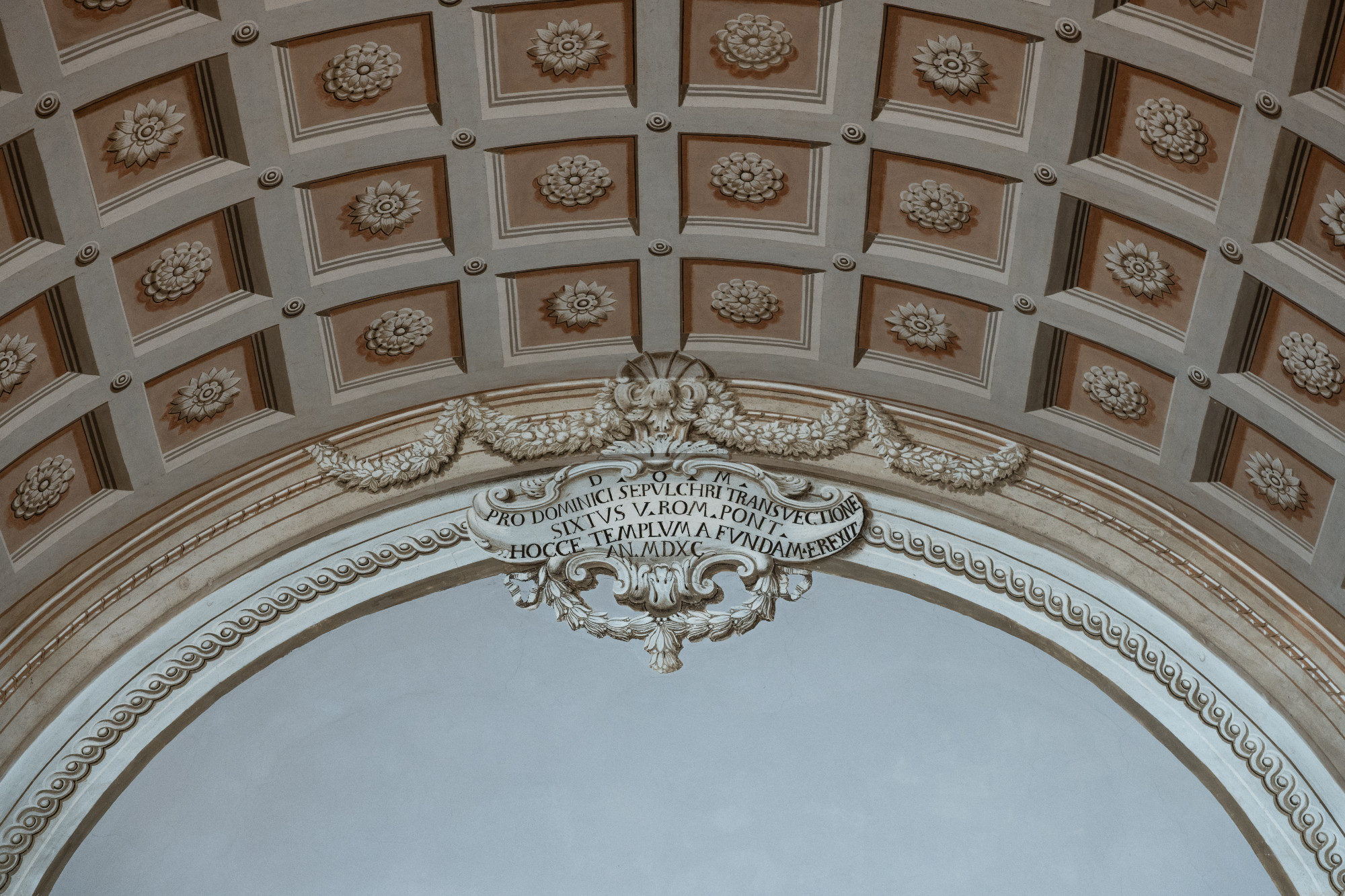
The lower church of the Cathedral, built in the short span of one year and six months (1589–1590), serves as its base and buttress. Its Greek-cross plan with four arms and its interior decoration are the work of Luigi Fontana (1827–1908) of Monte San Pietrangeli. Inside, one can admire an artistic permanent Nativity scene, a reproduction of the Grotto of Lourdes, and a sculptural plaster group of the Deposition of Christ by the Ascoli-born artist Giorgio Paci, located in the place that Sixtus V had chosen for the transfer of the Holy Sepulchre of Jerusalem—a most glorious vision that he was never able to realize, as attested by the decorative cartouche inside.