

 Via Giacomo Leopardi, 15, 63068 Montalto delle Marche AP
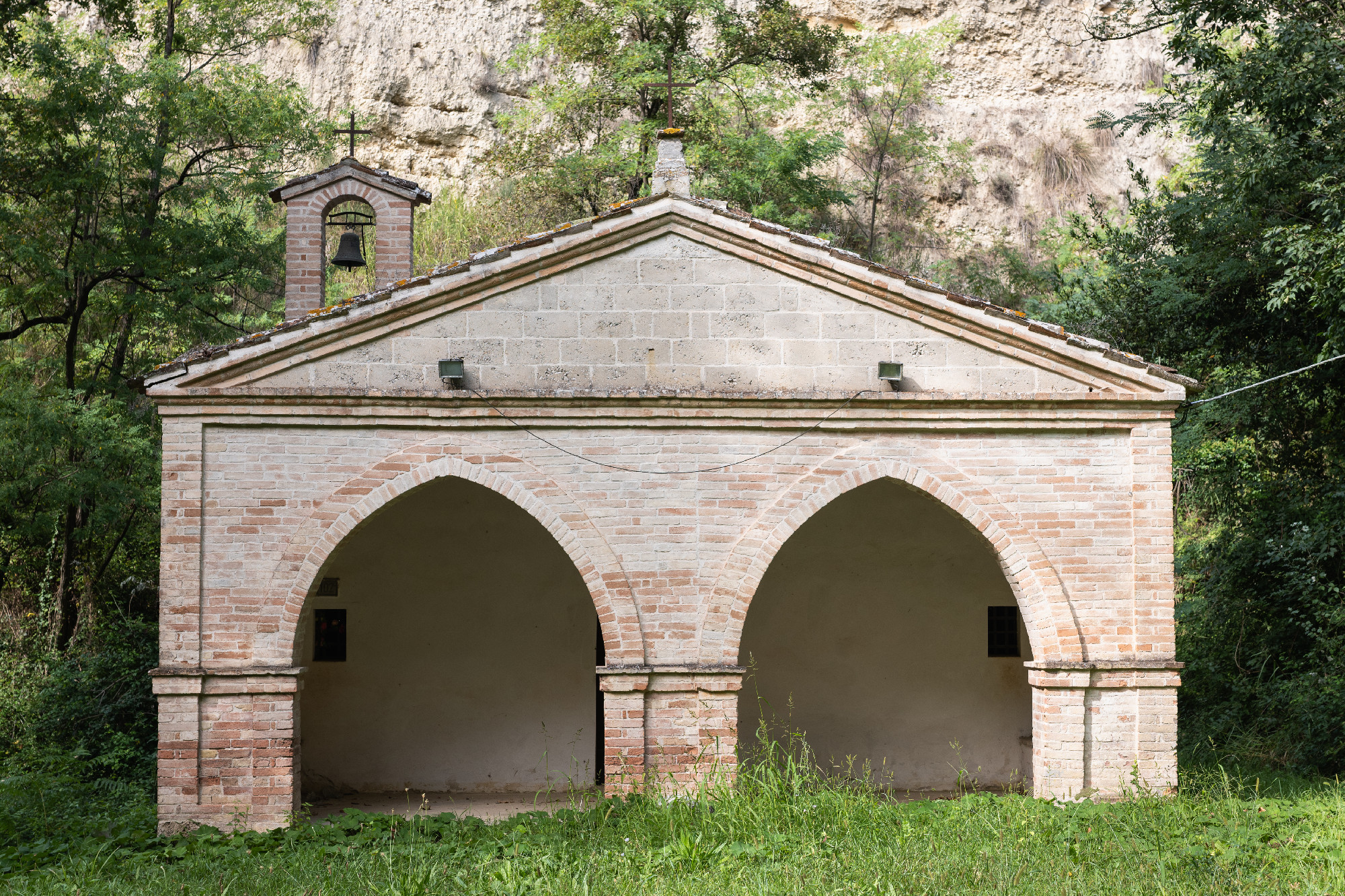
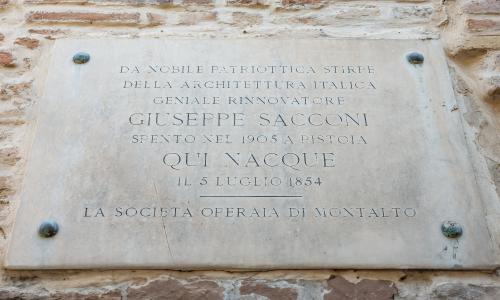
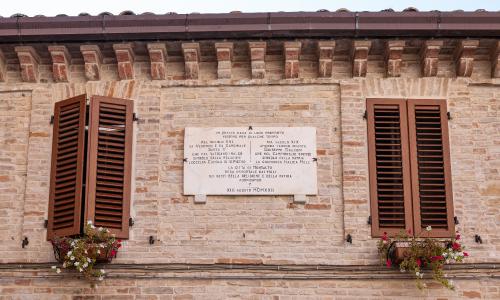
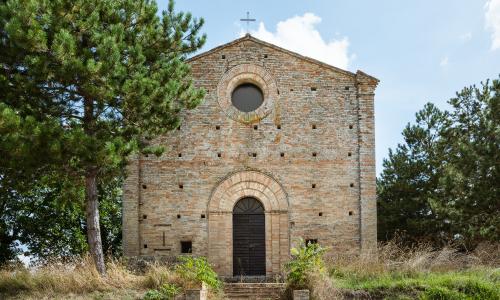
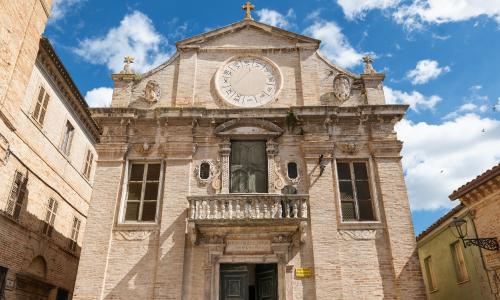
A hidden gem at the end of a steep path descending from the walls of Porchia. Surrounded by vegetation, the small church of the Madonna della Pace is a true oasis. Based on its typological features, its construction can be dated to around the 15th century. It underwent enlargement and reorganization around the 18th century. During the apostolic visitation of Monsignor Maremonti in 1573, there is no mention of this church in the locality of Porchia. A plaque set into the wall to the left of the church states that it was rebuilt in 1902 with the support of Queen Margherita and the people of Porchia. The portico with two pointed-arch bays is the result of the early 20th-century reconstruction. Above the cornice rises a triangular pediment, crowned by a linear terracotta frieze. On the left, elevated above the roof, stands the single-bay bell gable.
The church has a rectangular plan, oriented perpendicular to the entrance. Two square windows provide natural light. The presbytery is introduced by a round arch supported by brick pillars. On the back wall once stood the reredos of the pre–Vatican II altar, now lost. The central arched niche is set between two pilasters with Corinthian capitals. Above the architrave is a triangular tympanum with a molded cornice. The pilasters and tympanum are clad in orange-veined marble, while other materials frame the niche that houses the statue of the Madonna and Child.
Built using traditional techniques, the church has load-bearing masonry made of solid bricks and blocks of local stone bound with lime mortar. The exterior surfaces are faced in brick, while the interior walls are plastered and painted. The building is covered by a gabled roof: wooden beams support the secondary rafters, on which terracotta tiles are laid, with the exterior finished in curved roof tiles.
Accessible only on foot, the path leading to the church, though short, is quite steep and requires suitable footwear—but the effort is well worth it.