

 Piazza Umberto I, 14, 63068 Montalto delle Marche AP
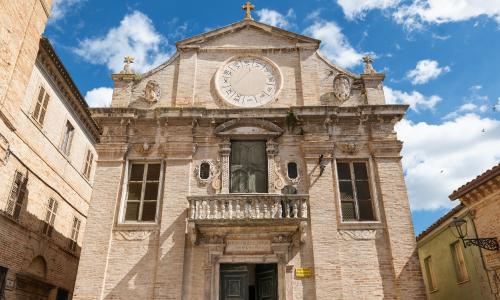
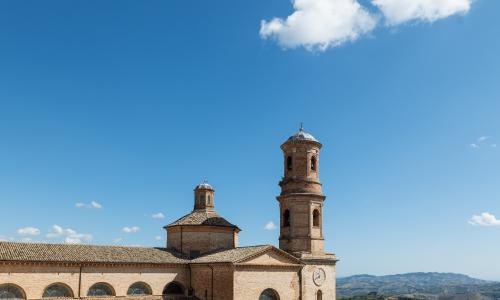
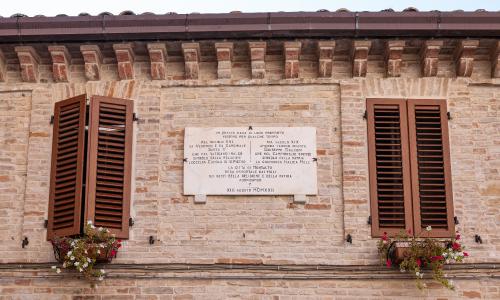
In Montalto, Sisto V undertook bold projects that still define the town’s monumental character. His vision is evident in the grandeur of architectures such as the Palazzo Comunale and the Palazzo del Governatore. In 1587, the second year of his pontificate, the first governor of the Presidato, Giulio Sclafenato, signed the construction contract for the Apostolic Palace on behalf of the community, entrusting the work to the Lombard Pietro Squella, considered the finest mason in the province. The building’s layout is imposing, and the interior architecture was designed to serve both as a prestigious residence and a center of governance. On the first floor were the apartments for the Preside, while the second housed the offices of the Presidato government: the lieutenant’s office, the chancery, and the archive. The vestibule displays numerous travertine coats of arms of the various governors, belonging to some of the most prominent noble families of the time.
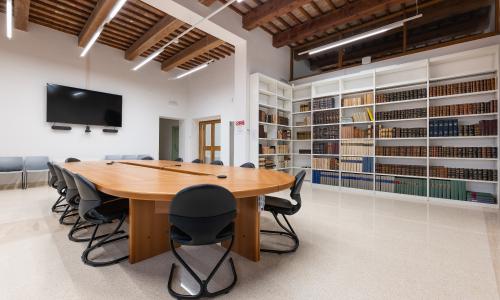
The current Town Hall, in addition to having been the seat of the Presidato, later served as a prison, and its original cells are still preserved today. Following restoration work in 1995, the building accommodated the Civic Art Gallery and the archaeological collection. The recovered basement spaces were converted into an ethnographic museum of local trades, while the former cells on the mezzanine floor now host the Museum of Prisons. Currently, the building is closed to the public due to the 2016 earthquake, and restoration work is underway.
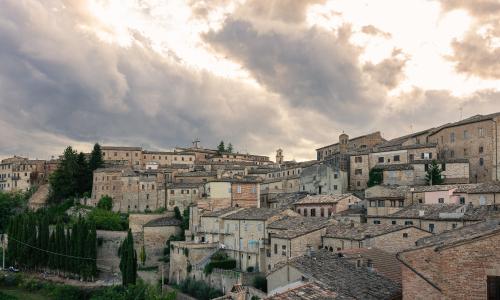
Thanks to the Metroborgo project, all existing museum sites will be unified into the MuTeB – Museum of the Territory and the Civilization of the Boroughs: a single, expanded, and refunctionalized path dedicated to the history of Montalto and the evolution of its urban model, understood as a distinctive cultural and anthropological heritage of the Italian context, particularly the Apennine inland areas.
The MuTeB museum narrative will adopt innovative digital communication methods, engaging in a direct dialogue with the stories and materials preserved by the Historical Archive of Montalto and the Sistine Presidato, as well as with the dispersed micro-artistic installations of Borgostory.