

 63068 Montalto delle Marche AP
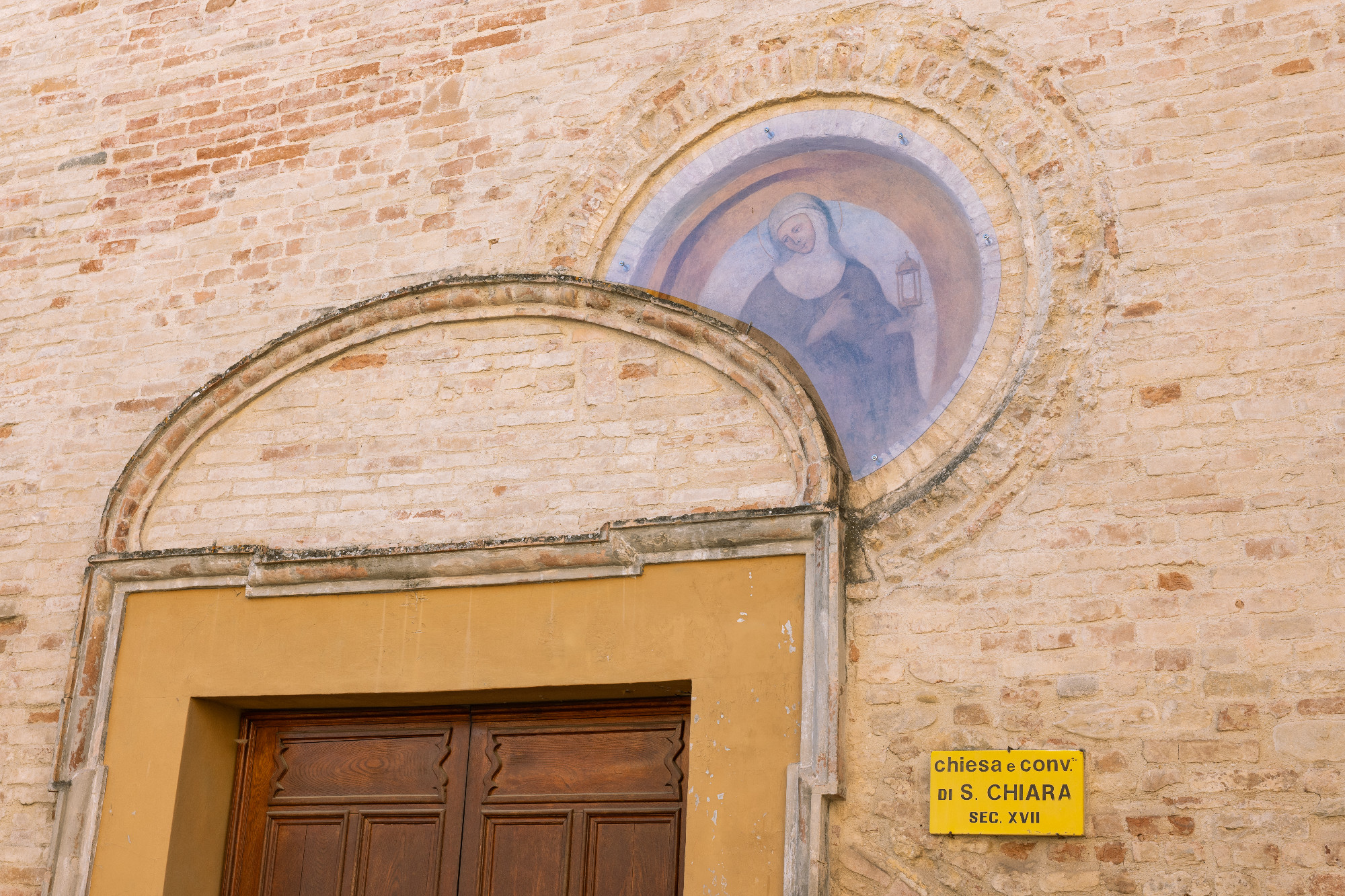
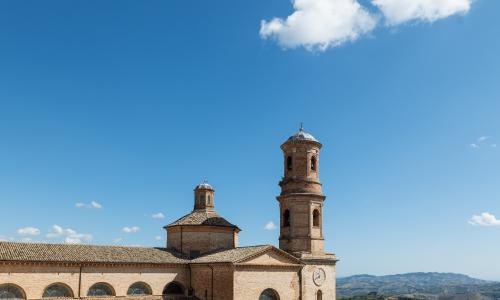
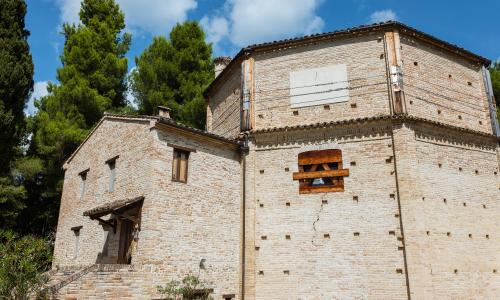
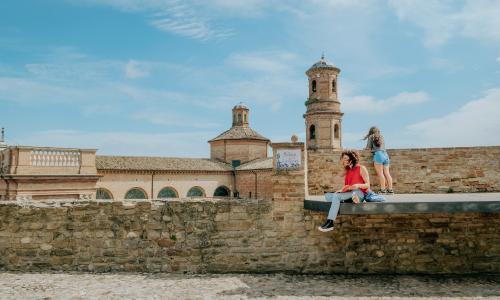
Just before reaching Piazza Umberto I, along the charming Corso Vittorio Emanuele, stands the Monastery of the Poor Clares. A place of prayer and vocation, it was, until a few years ago, the beating heart of the village thanks to the presence of the cloistered nuns. Even the youngest still remember the familiarity and kindness of the sisters, who would often give visitors the leftover pieces of the consecrated wafers.
The Franciscan presence in Montalto dates back to 1215, with the foundation of the Convent of S. Francesco delle Fratte, where Felice Peretti, the future Pope Sixtus V, was educated. Almost four centuries later, the Monastery of S. Chiara was established. It opened in 1631 with the first two nuns arriving from the urbanist monastery of Monte Santo (today Potenza Picena), following the Rule. Between the 17th and 18th centuries, the monastery was enriched by frequent vocations of girls from prominent local noble families and from around twenty other Italian towns, including Venice, who brought dowries upon their entry.
At the beginning of the 19th century, under a politically weak Papal State, the monastery faced great difficulties. In 1810, a Napoleonic imperial decree suppressed all religious orders, and the nuns were expelled while the monastery was stripped of its assets. The Papal State was restored in 1815 at the Congress of Vienna, and life at the monastery resumed.
In 1855, a young girl of about nine years old named Amakera, later known as “la Moretta,” was freed from slavery in Darfur, a mountainous region west of Khartoum. Rescued by the Genoese priest Don Nicolò Olivieri, she was brought to the Montalto Monastery, baptized with the names Maria, Agnese, Enrica, Giuseppa, Luisa, Eleonora, Giacinta, and Chiara, and received her First Communion and Confirmation, with noble sponsors from Montalto and Ascoli.
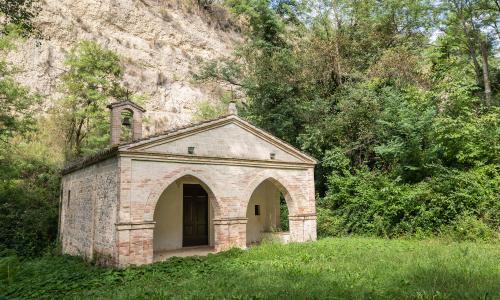
Difficult times continued in 1861, with the unification of Italy, when the civil status of religious houses and other ecclesiastical establishments was revoked, transferring administration, ownership, and income to the Church Treasury. On April 1, 1864, the nuns were once again forced to leave the monastery and found refuge in the Romitorio just outside Montalto, where they stayed until 1876. Their return was made possible by the generosity of Nicola Pasqualini, whose palace bordered the monastery.
Over the years, the number of nuns dwindled to a few, but of great character. In 1992, three Poor Clares from Montalto traveled to the Valle de Aragón in Mexico City, where they founded the new Monastery of Our Lady of the Light. Saint Leonard of Port Maurice, patron of Imperia, visited the Montalto Monastery and made a prophetic statement, saying: “This monastery will continue to live in the centuries to come. In this house, there will always be generous souls who love and praise the Lord. They will face hardships, but the monastery will not perish; within the community there will be blind and lame, yet it will endure, to the glory of God.” Indeed, life in the Monastery of S. Chiara continued, remarkably resisting the turbulence of modern life, until 2019.
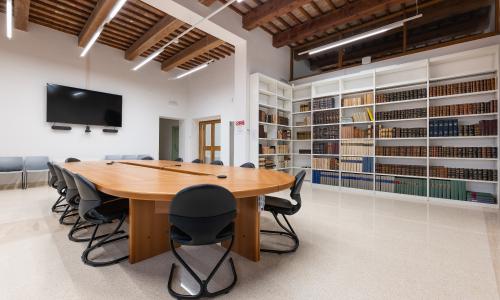
Now owned by the municipality, as part of the Metroborgo project, the former monastery will host a new center for research, education, and services focused on the protection and promotion of intangible cultural heritage. The center will combine technological innovation and digital culture with anthropological research and the scientific rigor of archival methodology, aiming to develop methods and best practices for mapping, cataloging, and digitizing traditions and knowledge—a fragile heritage at high risk of loss—made accessible and enhanced through the widespread “Borgostory” project.
Inside the complex, classrooms, laboratories, and guest accommodations will welcome students, researchers, and visitors from Italy and abroad. Additionally, the ground floor will feature a multimedia presentation on the history of the Urbanist Poor Clares of Montalto delle Marche, who shaped the essence of the oldest part of the village from the 1600s until 2019.