

 Via Peracchia, 63068 Montalto delle Marche AP
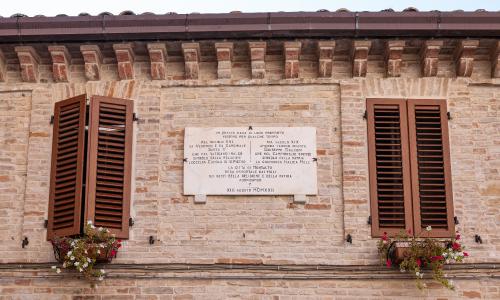
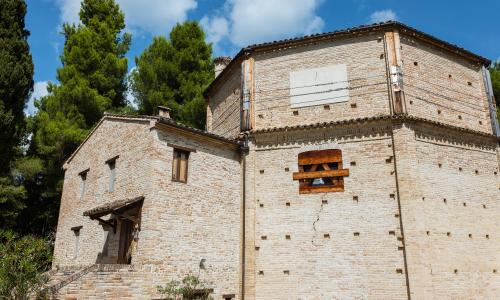
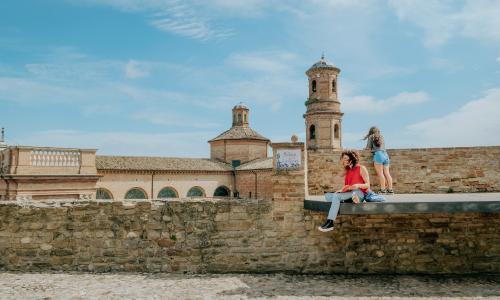
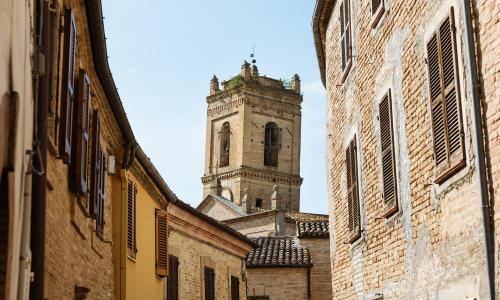
It is the other main entrance to the town, on the western side, also known as Porta a Capite, where the roads from Ascoli, the mountains, and the Farfa lands converged. Its name preserves the memory of the ancient castle, Monte Patrizio. Surmounted by a 1649 inscription honoring the great fellow citizen Sisto V, calling him both son and father at the same time, and crowned by the imposing tower, it witnessed the community’s events for centuries. In 1380, it repelled the attack of the mercenaries of Giovanni Acuto’s White Company and Count Lando, only later submitting to the Sforza and the Duke of Urbino.
Porta Patrizia was the entrance through which the Master of Justice, the executioner, arrived for capital punishments, accompanied by his guard. It was also from here that Monsignor Paolo Emilio Giovannini, the first bishop of Montalto, left under the escort of two of his nephews, only to be kidnapped—with their complicity—by bandits, who demanded a ransom of 2,000 scudi for his release.
But Porta Patrizia also welcomed merchants, pilgrims, and wanderers, bringing news from afar. Notaries were stationed there to serve anyone needing to formalize legal acts: a sale, a lease, a marriage contract, or a testamentary bequest. It was also a place for lively debate, as news from distant lands arrived on dusty feet or muleback. In the shadow of Porta Patrizia, wit and folly, cunning and clumsiness competed, as recounted in the story of a solemn wager recorded in a notarial act on April 26, 1555, between Bitto di Rigo, a courageous but reckless master shoemaker, and Ser Giulio Sclara, a skilled and prudent notary. The bet concerned the winner between Emperor Charles of Spain and Pope Clement, who were besieging Siena defended by the French of King Henry. Bitto wagered on the French and the Sienese, Ser Giulio on the Spaniards led by Cosimo de’ Medici. Much of the community watched the contest. Ser Giulio cheated, for four days earlier, on April 21, Siena had already surrendered. Ser Giulio was informed; Bitto was unaware.
Finally, from Porta Patrizia in the early spring of 1596, Mario Castralupi departed on a pilgrimage to Santiago de Compostela and never returned to Montalto.